Popular Animals Illustration Vol 03: A Hand-Drawn Collection for Creative and Educational Projects
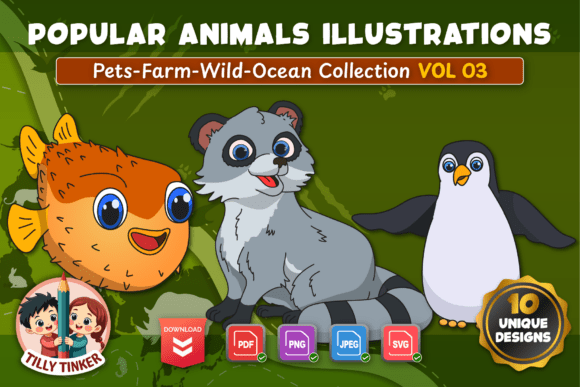
When you need animal illustrations that feel friendly, clean, and approachable, the style and format of the artwork matter as much as the subject itself. Popular Animals Illustration Vol 03 offers a curated set of ten hand-drawn animal designs—salmon, rooster, rhino, reindeer, raccoon, rabbit, pufferfish, pig, penguin, and panda—rendered in a deliberately simple, colorful style with smooth outlines and soft shading. This collection sits at the intersection of playful charm and practical utility, making it worth a closer look for anyone creating children’s learning materials, nursery decor, flashcards, worksheets, or printable projects.
But no single illustration set fits every need. Understanding what makes this volume distinct, where it works best, and where you might need something else can help you decide if it belongs in your resource library.
What Is Popular Animals Illustration Vol 03, and What Makes It Distinct?
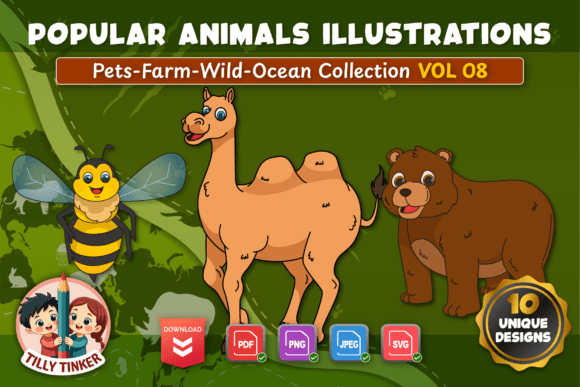
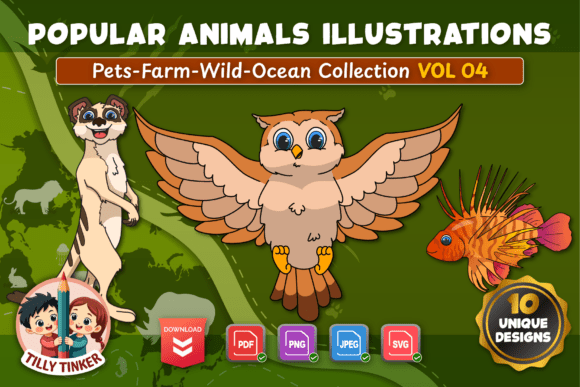
The collection contains ten popular animals, each illustrated with a hand-drawn feel that avoids the overly polished look of many vector clip art sets. The lines are smooth but not rigid, the coloring is clean and digital yet retains a gentle, handcrafted quality. Soft shading gives each animal a bit of depth without becoming complex or distracting. The cartoon details are friendly—eyes are large and expressive, poses are simple and approachable.
This style is deliberately chosen. It bridges the gap between a child’s own drawing and a fully professional illustration, which makes the images feel both accessible and polished. The square format (8.5 × 8.5 inches) at 300 DPI ensures high-resolution printing, and the inclusion of PDF, PNG, JPG, and editable SVG files gives you flexibility across digital and print workflows. Transparent backgrounds in PNG and SVG make compositing into worksheets, posters, or flashcards straightforward.
How It Compares to Other Animal Illustration Styles
To see where this collection fits, it helps to consider the broader landscape of animal images available for creative projects. Three common alternatives stand out: realistic wildlife illustrations, flat vector icon sets, and generic stock photography.
- Realistic wildlife illustrations aim for anatomical accuracy and often include detailed textures, natural lighting, and environmental context. These are excellent for nature guides, biology materials, or older audiences. But they can be visually busy for young children, and the level of detail may not reproduce well at small sizes on flashcards or worksheets.
- Flat vector icon sets are minimalist, often using solid colors without shading and geometric shapes. They work well for infographics, app icons, and modern branding. However, their lack of personality can make them feel cold for nursery decor or early childhood learning, where warmth and friendliness are important.
- Stock photography offers realistic photos, but licensing can be restrictive, image resolution varies, and children may find photos of animals less engaging than illustrated versions. Photos also require careful cropping and background removal for many DIY projects.
Popular Animals Illustration Vol 03 occupies a middle ground. It has the warmth of hand-drawn art but the consistency and cleanliness of digital production. The soft shading adds a gentle three-dimensional feel without crossing into photorealism. This makes it particularly suited for audiences that need approachable, non-intimidating visuals—especially toddlers, preschoolers, and early elementary learners.
Strengths and Best-Fit Situations
When you are evaluating illustration collections, you want to match the art style to the intended use case. The strengths of this volume become most apparent in specific scenarios.
Children’s Educational Materials and Classroom Resources
Smooth outlines and friendly expressions reduce visual noise, helping children focus on the animal itself rather than complicated details. The soft shading gives each animal a bit of personality without overwhelming the page. Teachers and homeschoolers who need consistent, recognizable animals for letter-of-the-week activities, animal unit studies, or vocabulary flashcards will find these illustrations easy to drop into worksheets or presentation slides. The square format also works well for classroom posters or bulletin board cutouts when printed at larger sizes.
Printable Decor and Nursery Designs
Parents and decorators often want wall art that feels charming but not babyish. The hand-drawn quality of these illustrations offers a timeless, slightly artistic look. A set of matching animal prints in a nursery or playroom creates a cohesive theme without the cartoonish exaggeration of many licensed characters. The editable SVG files mean you can resize and recolor the animals to match a specific color palette if needed.
KDP Interiors and Activity Books
Self-publishers on platforms like Amazon KDP need high-resolution, print-ready images that work inside activity books, coloring books, or early readers. The transparent background PNGs allow you to layer animals onto different page backgrounds quickly. The clean style also reproduces well on both white and lightly colored paper, reducing ink bleed concerns. The set’s 10 animals provide enough variety for a short activity book or the core illustrations for a vocabulary workbook, though you may need additional images for longer projects.
Stickers, Crafts, and DIY Projects
Because the files come in SVG format, they can be imported into cutting machine software (like Cricut Design Space or Silhouette Studio) for sticker making or vinyl decals. The smooth outlines cut cleanly, and the soft shading adds visual interest even in single-color cuts. For handmade greeting cards, party decorations, or scrapbooking, these illustrations offer a cohesive set that saves time compared to sourcing images individually.
Tradeoffs and Limitations
No collection is perfect for every project, and being aware of limitations helps you avoid frustration later. Here are the key tradeoffs with Popular Animals Illustration Vol 03.
Limited Animal Diversity
The set includes ten animals—salmon, rooster, rhino, reindeer, raccoon, rabbit, pufferfish, pig, penguin, and panda. That covers a nice range of habitats (farm, forest, ocean, arctic) but leaves out common educational staples like dog, cat, cow, elephant, or lion. If your curriculum or project requires a broader animal spectrum, you will either need to supplement with another collection or create additional illustrations yourself. Combining this set with a complementary collection that uses a similar style could work, but matching exact line weights and shading is always a challenge.
Style Suitability for Older Audiences
The friendly cartoon details and soft shading are clearly targeted at younger children. For materials aimed at older elementary students, teenagers, or adults—such as biology worksheets, wildlife brochures, or professional presentations—this style may read as too juvenile. Realistic illustrations or clean icons would likely communicate more authority and precision. Similarly, if you need animals for a corporate or branding context, the hand-drawn feel might not align with a more modern or minimalist brand identity.
Square Format Constraints
The 8.5 × 8.5 inch square is convenient for certain projects (like square flashcards or social media graphics), but it may require cropping or scaling for standard letter-size worksheets (8.5 × 11) or landscape-oriented posters. While high resolution helps maintain quality, resizing can shift the composition. You may need to adjust within your layout software to make the animals fit naturally into non-square spaces.
Complexity of the Hand-Drawn Look
Some users might expect perfectly uniform lines and colors typical of mass-produced vector sets. Because these illustrations are hand-drawn, subtle variations in line thickness or shading exist—these are often considered charming but could be perceived as inconsistent if you are aiming for a very tight, uniform aesthetic. For most children’s projects, this variation adds warmth, but it is worth noting if you require hyper-consistency across dozens of images.
When Popular Animals Illustration Vol 03 Is the Right Choice
Choose this collection when you need a ready-to-use set of animal illustrations that feel warm, playful, and intentionally crafted. It is especially well-suited for:
- Early childhood educators (preschool to first grade) building letter-sound or animal-themed units.
- Homeschool parents creating custom learning materials without design experience.
- Small business owners selling printable wall art, flashcards, or educational games on Etsy or Teachers Pay Teachers.
- Crafter making stickers, decals, or party favors for animal-themed events.
- Anyone who values a cohesive, hand-drawn aesthetic across multiple projects and needs editable files to tweak colors or sizes.
When You Might Need a Different Option
Conversely, you may want to look elsewhere if:
- Your project requires a large number of animals (more than ten) or specific species not in this set.
- Your audience is upper elementary or older and needs realistic or scientifically accurate depiction.
- You are creating materials for commercial branding and require a modern, flat, or minimalist look.
- You need images that work universally across very diverse cultural contexts where cartoon animals might have different connotations.
- You prefer photography over illustration for authenticity or realism.
Practical Examples of Use
Consider two different scenarios to see how the collection fits.
Example 1: Preschool “Animals of the World” Flashcards.
You are designing a set of 12 flashcards for a 3-year-old. Using Popular Animals Illustration Vol 03, you have ten animals ready. You print them on cardstock, cut along the square borders, and laminate. The friendly faces keep the child engaged. You have to create or source two more animals (e.g., a cow and a bear) from another source, but the visual consistency of the ten carries the overall set. This is a good fit.
Example 2: Middle School Wildlife Poster.
You need a poster on the classification of mammals for a 12-year-old’s science project. The soft shading and cartoon eyes in this collection may look immature for that age group. You would likely prefer realistic photographs or anatomical drawings, so this collection would be a poor choice.
Making an Informed Decision
When evaluating any illustration collection, focus on the alignment between the art style and your project’s tone, audience, and technical requirements. Popular Animals Illustration Vol 03 delivers a clean, hand-drawn look with practical file formats that simplify digital and print workflows. Its strengths lie in warmth and accessibility for young children, not in breadth or realism. By understanding where it excels and where it falls short, you can decide if this collection supports your goals—or if you need to blend it with other resources or choose a different approach entirely.