Seamless Minimalist Chevron Dash Pattern: A Practical Evaluation for Designers and Decor Enthusiasts
In the crowded landscape of digital design assets, distinguishing between a passing trend and a genuinely useful resource can be challenging. The Seamless Minimalist Chevron Dash Pattern has gained attention as a vector design element that promises both aesthetic appeal and functional versatility. This article offers a balanced examination of what this pattern offers, where it excels, and where alternatives might be worth your consideration.
What Is the Seamless Minimalist Chevron Dash Pattern?
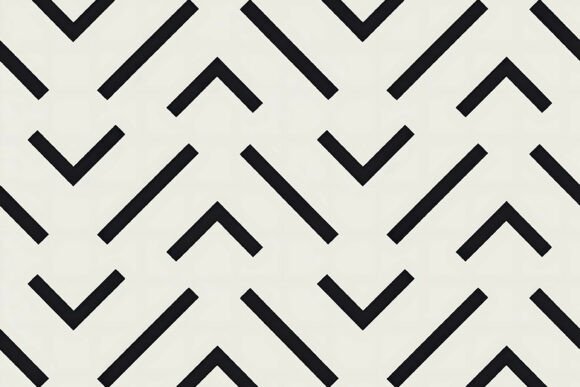
At its core, the Seamless Minimalist Chevron Dash Pattern is a vector-based repeating design that combines chevron motifs with dashed line elements. Created at a 5760x5760 pixel resolution, it offers a high level of detail suitable for both print and digital applications. The pattern employs a monochrome palette, typically black and white, drawing from Scandinavian design traditions that emphasize clarity, restraint, and functional beauty.
The herringbone-inspired arrangement of dashes and chevrons creates a geometric texture that reads as both structured and organic. Because it is a seamless repeat, the pattern tiles without visible seams, making it practical for covering large surfaces such as wallpaper, fabric, or packaging. The hand-drawn quality adds a subtle irregularity that distinguishes it from purely algorithmic patterns, giving it a more tactile, crafted feel.
Resolution and Scalability
The 5760x5760 pixel size is one of the pattern's most practical features. At this resolution, you can print the design at large sizes without pixelation or loss of detail. This matters if you intend to use the pattern for wall murals, large-format prints, or high-resolution digital backgrounds. However, if your work is primarily digital and screen-based, such as website backgrounds or social media graphics, a smaller file size might be more manageable and faster to render.
Color Limitations: Monochrome as a Strength and Constraint
The black and white palette is both an advantage and a limitation. From a practical standpoint, a monochrome pattern integrates easily into existing color schemes. You can overlay it onto colored backgrounds, adjust opacity, or use it as a texture layer without worrying about clashing hues. This makes the Seamless Minimalist Chevron Dash Pattern particularly useful for projects where you need a neutral but visually engaging backdrop.
On the other hand, if your project demands vibrant color or specific brand palettes, a monochrome pattern requires additional work to recolor. While vector formats allow recoloring, the process adds time and may not yield the same visual cohesiveness as a pattern originally designed in your target colors. Designers should weigh this tradeoff when considering the pattern for brand-consistent projects.
File Format and Compatibility
As a vector design, the pattern typically comes in formats such as AI, EPS, SVG, or PDF, which are compatible with major design software including Adobe Illustrator, Inkscape, and Affinity Designer. This vector nature ensures that you can scale the pattern infinitely without quality loss. If you work primarily in raster-based tools like Photoshop, you may need to rasterize the vector file, which can diminish its scalability advantage. Consider your typical workflow before committing to a vector-based asset.
Interior Design and Home Decor
The Scandinavian-inspired aesthetic of this pattern aligns well with modern interior design trends. It works effectively for:
- Nursery decor: The monochrome palette creates a calm, visually stimulating environment without overwhelming the room. The geometric dashes can be engaging for children without being overly busy.
- Wallpaper and wall murals: The seamless nature and high resolution make it suitable for both feature walls and full-room applications. The monochrome colors allow the pattern to recede or stand out depending on surrounding decor.
- Textile design: From throw pillows to curtains, the pattern's repeat structure transfers well to fabric. The hand-drawn quality avoids a mechanical look that can feel cold in living spaces.
Print-on-Demand and KDP Projects
For those using platforms like Amazon KDP (Kindle Direct Publishing), Printful, or Redbubble, the Seamless Minimalist Chevron Dash Pattern offers a ready-to-use design element that reduces production time. Its commercial viability is enhanced by its versatility: you can apply it to notebook covers, phone cases, mugs, tote bags, and more. The monochrome palette also means lower ink costs for physical printing, which can improve profit margins on print-on-demand items.
Modern and Minimalist Branding
If your brand identity emphasizes simplicity, clarity, and sophistication, this pattern can serve as a background element, packaging texture, or accent detail. It pairs well with sans-serif typography and clean layouts. However, it may not suit brands that require warmth, ornamentation, or strong color identities without modification.
Repetition and Visual Fatigue
While the seamless nature of the pattern is a technical strength, repetitive geometric patterns can sometimes lead to visual monotony. The dashes and chevrons, though hand-drawn, follow a consistent structure. In large applications, some viewers may find the pattern less engaging over time. To mitigate this, consider using the pattern at smaller scales or in combination with other textures and focal points. Layering the pattern with a subtle gradient or using it only on accent surfaces can maintain visual interest.
Versatility vs. Specialization
The pattern's black and white palette and minimalist design make it broadly applicable, but they also mean it may not be the optimal choice for projects requiring bold expression, cultural specificity, or narrative detail. For example, a children's book about a colorful jungle or a brand promoting vibrant energy would likely benefit from a pattern with more color and illustrative complexity. The Seamless Minimalist Chevron Dash Pattern excels in contexts where restraint and sophistication are priorities, not where maximalism or vivid storytelling is needed.
Learning Curve for Customization
If you are new to vector design software, customizing the pattern may present a challenge. Changing the dash length, adjusting the chevron angle, or recoloring the pattern requires basic knowledge of vector editing tools. While many designers will find this straightforward, hobbyists or those transitioning from raster-based workflows should factor in the time needed to learn these skills. Some marketplaces offer pre-recolored variations, but this limits your control over the final output.
Alternatives Worth Considering
Depending on your specific project needs, other pattern types may serve you better. Here are a few scenarios where alternatives deserve attention:
- If you need organic, flowing forms: Floral or botanical patterns provide a softer, more natural aesthetic that can suit bohemian or rustic decor themes. The rigid geometry of the chevron dash pattern contrasts sharply with such styles.
- If color variety is essential: Multicolored patterns or patterns designed with specific color palettes in mind save time and reduce the need for manual recoloring. Some designers offer pattern packs with multiple colorways, which can be more efficient for branded projects.
- If you require extremely fine detail at small scales: While the 5760x5760 pixel resolution is generous, the dash motif itself is relatively simple. Patterns with smaller, more intricate elements may be preferable for applications like greeting cards, small packaging, or jewelry design where the pattern is viewed up close.
- If your budget is limited: The Seamless Minimalist Chevron Dash Pattern is a premium product, often priced accordingly. Free or lower-cost pattern resources exist, though they may offer lower resolution, fewer file formats, or less distinctive designs. Evaluate whether the pattern's unique qualities justify the investment relative to your project budget.
Practical Decision-Making Insights
To determine whether the Seamless Minimalist Chevron Dash Pattern aligns with your goals, consider these practical steps:
- Define your primary use case: Is this pattern for a single project, or do you plan to use it across multiple applications? Its versatility is an asset for repeated use, but if you need a one-off solution, a more specialized pattern might be more cost-effective.
- Assess your technical comfort level: If you are comfortable with vector editing, the pattern offers flexibility. If not, consider whether the out-of-the-box design meets your needs without modification.
- Test the pattern in context: Before committing to a large purchase, try to preview the pattern in a mock-up of your intended application. Many marketplaces offer preview tools or sample files. This helps identify any issues with scale, contrast, or visual rhythm before you invest time and money.
- Compare with similar offerings: Look at other seamless chevron, herringbone, or dash patterns on the market. Compare resolution, file formats, color options, and licensing terms. The Seamless Minimalist Chevron Dash Pattern may stand out for its hand-drawn quality and Scandinavian aesthetic, but alternatives may offer features better suited to your specific workflow.
- Consider long-term value: A pattern that works across multiple projects—from KDP interiors to home decor to branding—offers better return on investment than a pattern usable only in a narrow context. The Seamless Minimalist Chevron Dash Pattern has broad applicability, but only you can gauge how often its aesthetic will serve your portfolio or product line.
Final Evaluation: Who Should Choose This Pattern?
The Seamless Minimalist Chevron Dash Pattern is a well-crafted design tool that delivers on its promise of quality and utility. Its high resolution, seamless repeat, and Scandinavian-inspired simplicity make it a practical choice for designers and decor enthusiasts who value clean lines, monochrome versatility, and hand-drawn texture. It fits naturally into projects that benefit from understated elegance, such as modern interiors, minimalist branding, and print-on-demand merchandise.
However, it is not a universal solution. Those seeking vibrant color palettes, highly intricate detail, or organic forms will find better alternatives elsewhere. The pattern also requires some comfort with vector software for full customization, which may be a barrier for casual users.
Ultimately, the decision comes down to whether the pattern's strengths align with your specific creative needs. For the right project, the Seamless Minimalist Chevron Dash Pattern can be a reliable and aesthetically rewarding asset that streamlines your workflow and elevates your final product. By weighing the tradeoffs outlined here, you can make an informed choice that supports your goals without overcommitting to a design that may not be the perfect fit.